While cancer rarely spreads between individuals, genetic research indicates that melanoma tumors in catfish across Quebec and the northeastern U.S. are actually transmitting from one fish to another.
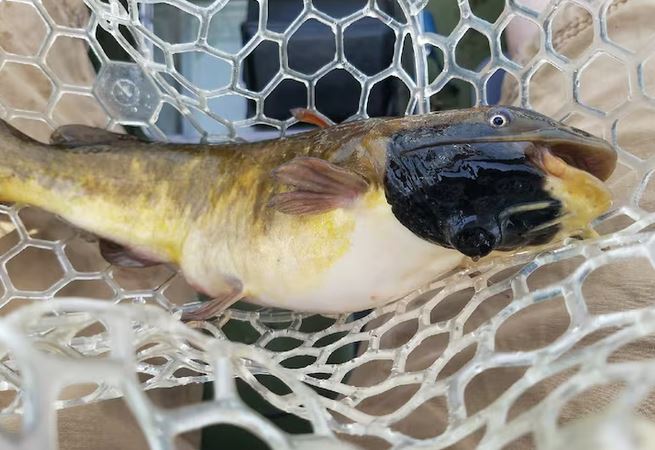 A groundbreaking Nature study has uncovered the first known transmissible cancer in fish – one of only a tiny handful ever documented in the animal kingdom.
According to co-lead researcher Julie Dragon, contagious cancers are extraordinarily rare in nature, previously found in just three other animal groups: dogs, Tasmanian devils, and certain shellfish.
This suggests very specific biological conditions must be at play for a tumor to jump from host to host.
Mystery In the Lake
The discovery traces back to 2012, when anglers on Lake Memphremagog – which crosses the Quebec-Vermont border – began catching brown bullhead catfish covered in unusual black lesions and growths.
Medical analysis confirmed these were melanoma tumors.
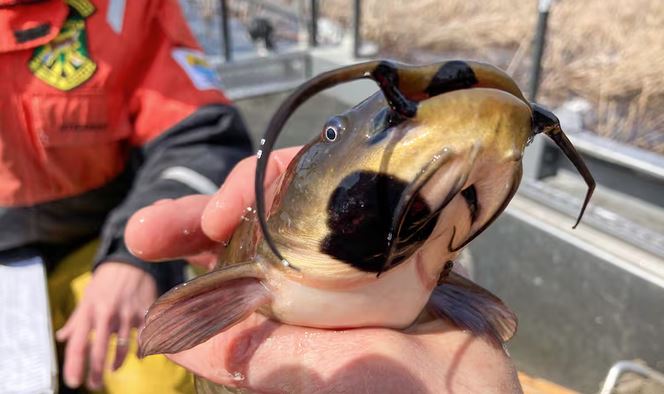 Today, the disease has exploded; it now affects roughly one-third of the lake’s brown bullhead population.
While some fish suffer severe cases where the cancer spreads to the brain or liver, others seem to tolerate it well, meaning long-term survival is possible.
Because the outbreak immediately followed severe flooding from Post-Tropical Storm Irene, researchers initially suspected chemical carcinogens washed into the water. However, tests remain inconclusive.
When Vermont wildlife officials asked Dragon to investigate a potential viral cause, genetic testing ruled out viruses.
Dragon wondered if heavy inbreeding had left the catfish population genetically vulnerable to cancer. However, testing revealed that the gene pool was actually quite diverse.
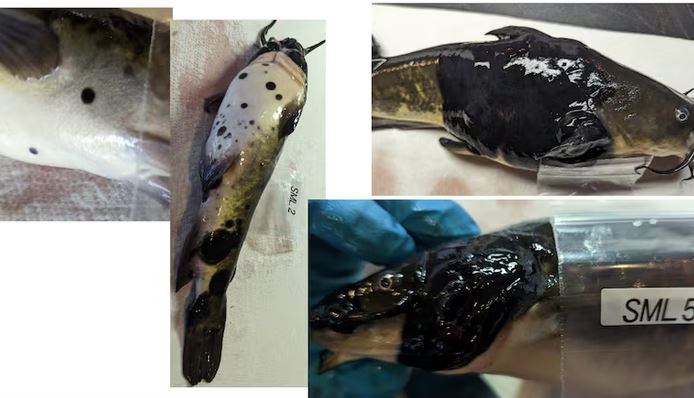 The real breakthrough came when researchers sequenced the DNA of the tumors themselves; they found that the tumor cells shared nearly identical genetic profiles with one another, rather than matching the DNA of the host fish carrying them.
This unexpected finding led co-author Sam Hart, who had previously studied contagious cancers in shellfish, to suspect a transmissible cancer.
Researchers theorize the cancer spreads during mating season, when adult catfish crowd tightly together and potentially puncture each other with their sharp fins.
While laboratory tests have yet to confirm direct transmission between live fish, experiments are planned to test the theory further.
Are the Fish Safe to Eat?
If you catch a catfish with tumors, official advice varies depending on which side of the border you are on.
Quebec’s Ministry of the Environment suggests not eating the fish just to be safe, though there’s currently no evidence that it may be harmful.
Researchers like Julie Dragon, on the other hand, believes that the fish remains entirely safe to eat.