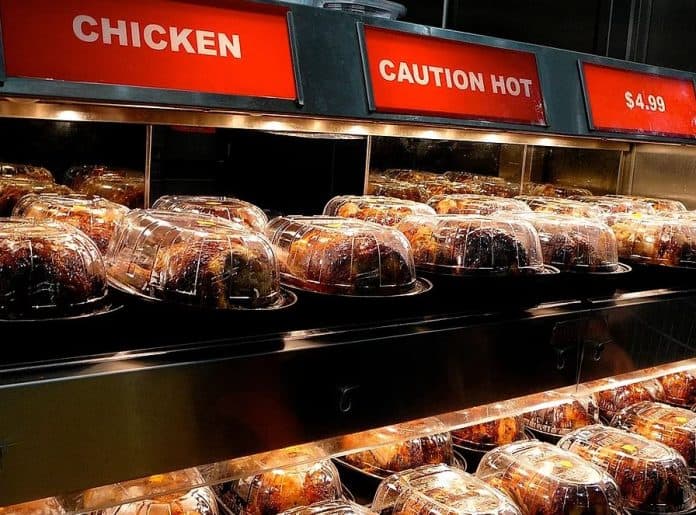
Costco’s rotisserie chickens are a fan favorite thanks to their low price and good flavor, which explains their popularity.
Costco is now dealing with a class-action lawsuit filed on January 22 in U.S. District Court, which that the company misled shoppers by advertising that its rotisserie chickens contain no preservatives.
According to the filing, the chickens contain carrageenan and sodium phosphate, ingredients that are used to help preserve texture and extend shelf life.

Costco has acknowledged that it does use both ingredients in its rotisserie chicken recipe.
While carrageenan and sodium phosphate are commonly found in prepared foods and are generally considered safe by federal regulators, the lawsuit argues that labeling the product as having no preservatives is still misleading.
The case was brought by two women from California who say they would not have bought the chicken, or would have paid less for it, if they had known preservatives were used.
As part of the complaint, the plaintiffs included photos of in-store signage and online listings stating the chickens contain no added preservatives.

Similar claims can also be seen in older photos of Costco rotisserie chickens shared on various image platforms.
Wesley Griffith of the Almeida Law Group, who represents the plaintiffs, said shoppers often rely on bold claims like “no preservatives” when choosing food. He noted that Costco’s ingredient labels conflict with its marketing and described the practice as both unlawful and unfair.
In a statement shared online, Griffith said he and his team were happy to see the retail chain remove claims stating that its chickens contained no preservatives.
He did not say, however, whether the lawsuit will be moving forward.
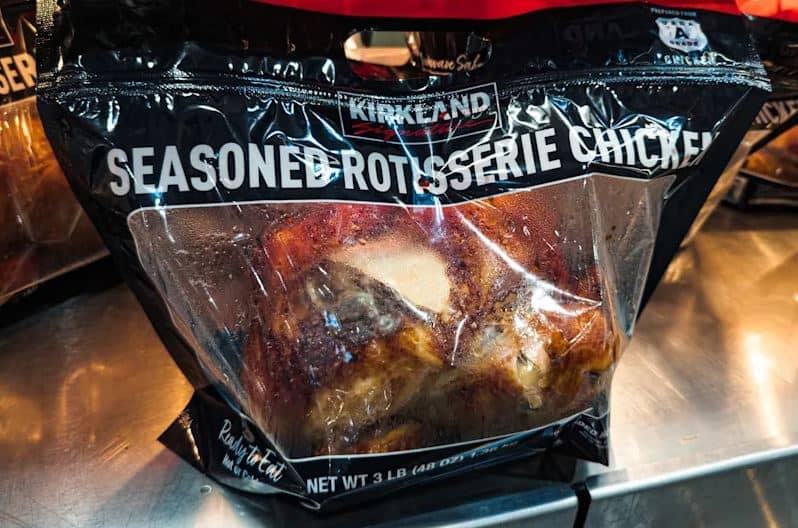
The two women who filed the lawsuit said they plan to keep buying Costco’s rotisserie chickens in the future, but added that they will no longer depend on the company’s labelling when making that choice.
In recent years, California has pushed hard for more health-focused consumer products and clearer labelling.
In 2023, the state became the first in the country to ban four food additives considered potentially harmful. Lawmakers have also taken steps to limit food dyes and ultra-processed foods in school meals.