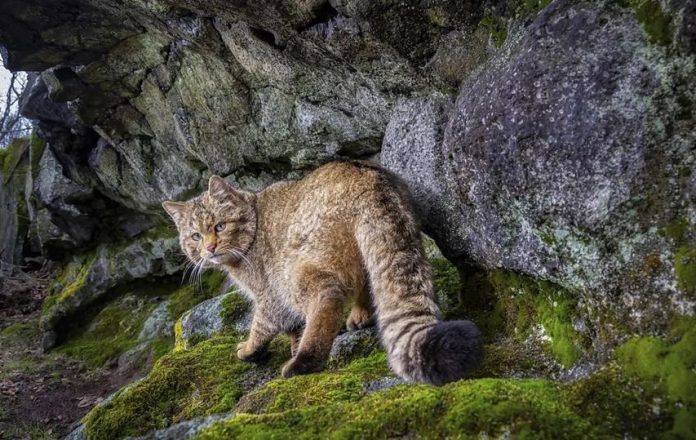
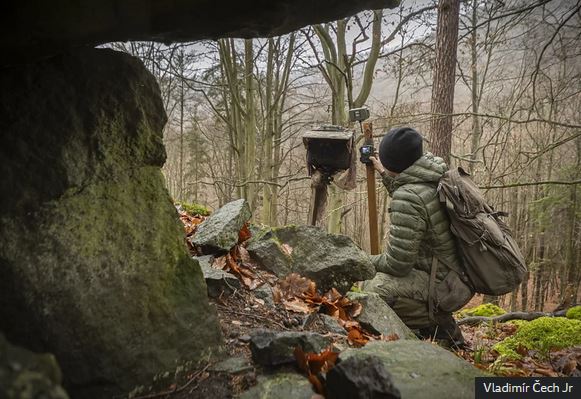
In 2020, wildlife photographer Vladimir Cech Jr. headed into a restricted military area in the Doupov Mountains of the Czech Republic with one goal in mind – to capture an image of the elusive European wildcat.
The species is so rarely seen that it was long thought to be extinct in parts of Europe.
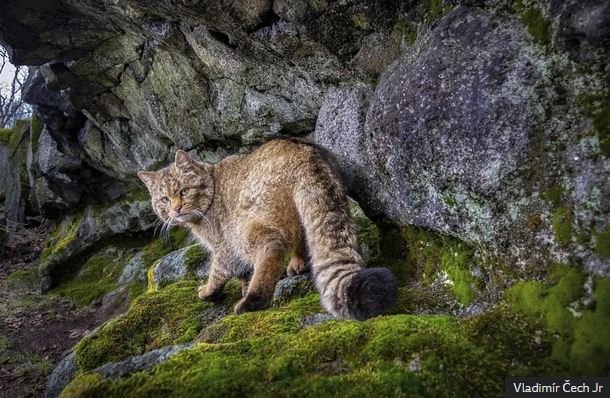
Throughout the 20th century, experts believed the wildcat had vanished entirely from the Czech Republic.
Later on, they started showing up on trail cameras in the Doupov Mountains.
Even then, no one had managed to capture clear, high-quality photos of the animals in the area.
In recent years, researchers have started spotting the elusive wildcat in other parts of Europe with the help of camera traps.
Scientists believe the animal’s elusive behavior played a large role in its survival, as it has allowed it to escape the intense hunting that wiped out many other species, such as the lynx.
Today, experts estimate there are around 140,000 European wildcats living across roughly two dozen countries. However, that number is still uncertain as the species is extremely shy and rarely seen.
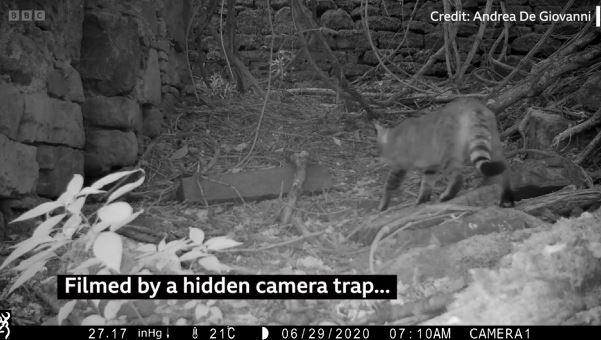
Andrea De Giovanni, a wildlife photographer and biologist from Italy who captured video footage of a wildcat, said the animals are often called “ghosts of the forest.”
Their ability to stay hidden makes it especially difficult to know where they might turn up next.
De Giovanni believes wildcats move in a much less predictable way than many other animals, which makes them difficult to spot.
Other species usually stick to familiar paths through the forest, however, wildcats do not seem to follow those same routines.
He was actually not expecting to capture a wildcat at all in Chiapporato, an abandoned village in the Apennine Mountains.
When he later reviewed the footage, he was unsure whether the animal was a domestic cat or a wildcat; it was only after he shared the video with scientists that they confirmed it was indeed a wildcat.
In the Czech Republic, modern sightings of the species did not begin until 2011. That year, a wildcat was captured on a camera trap placed to photograph lynxes in the Sumava Mountains.