March 17 marks 31 years since six teenage boys vanished in Pickering.
It’s still considered one of Canada’s most puzzling unsolved cases, and even now, there have been no clear answers. The boys’ families and friends are still waiting and hoping for answers.
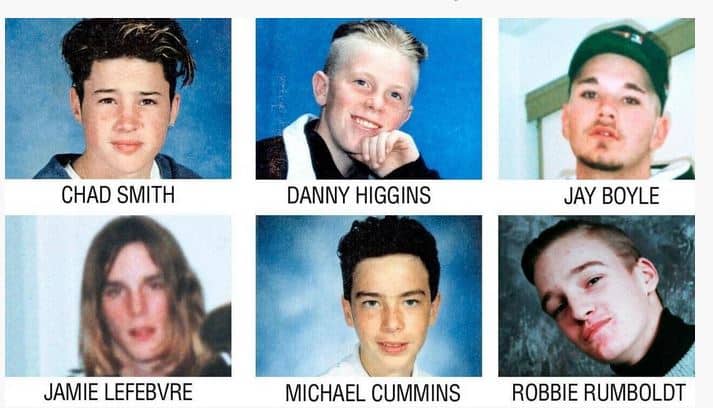
Investigators have never found solid evidence explaining what happened to Michael Cummins, Jay Boyle, Chad Smith, Danny Higgins, Jamie Lefebvre, and Robbie Rumboldt in the early hours of March 17, 1995.
Bruce Ricketts, a private investigator who dedicated years to the case without pay, passed away two years ago – before he got the answers he had been searching for.
Back in 2018, Ricketts shared some of his findings with The Pickering News Advertiser and kept providing updates over the years.
At one point, he suggested the teens may have had some connection to drugs, noting that the area was known as a hotspot at the time, with a lot of smuggling activity.
Since his passing, no one has taken on the case.
Over the years, the case has picked up a lot of attention online, with people sharing their own theories about what might have happened.
In the end, if someone out there knows the truth, they haven’t stepped forward.
The Search for the Boys
Police didn’t begin looking in the lake until about 36 hours after the teens were reported missing.
Chad and Jay’s girlfriends were the first to get worried and called police after they couldn’t reach them.

After the boys disappeared, thousands of people joined the search effort, but nothing turned up. An underwater search was never carried out.
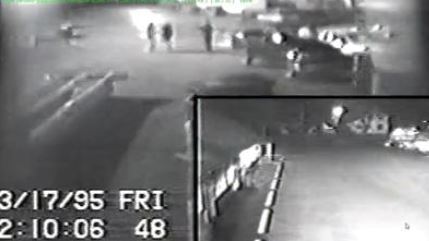
According to investigators, surveillance footage showed three of the teens entering the East Shore Marina on Frenchman’s Bay around 1:48 a.m. after leaving a party.
There was no footage of the other three, but Durham police believed all six were together.
Their theory was that the group took a 14-foot Boston Whaler replica along with a water tricycle, and that they ultimately died of hypothermia after the vessel overturned in the cold waters of Lake Ontario.
However, Ricketts wasn’t convinced; he felt that parts of the theory didn’t add up, such as where the can was found and how it would have drifted there.
Then in 1998, two sets of human remains were discovered near the Niagara River. One of them had pants similar to what Jay was said to be wearing the night he disappeared.
Years later, DNA testing was done, and the results confirmed the remains were not Jay’s.
Police are still asking anyone with information to reach out to Durham police. Tips can also be shared anonymously through Durham Regional Crime Stoppers online or by calling 1-800-222-TIPS.