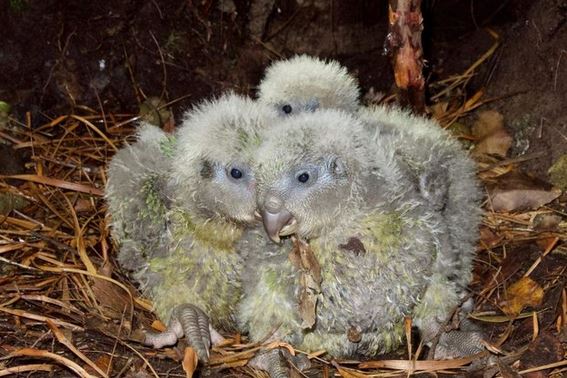
The kākāpō is one of New Zealand’s rarest birds, with only about 235 adults left in the wild.
When Adam Naylor, a veterinarian from Auckland Zoo, arrived at a nesting site, he noticed a chick with an unhealthy purple color. Relying on his veterinary training, he began performing CPR on the fragile bird.
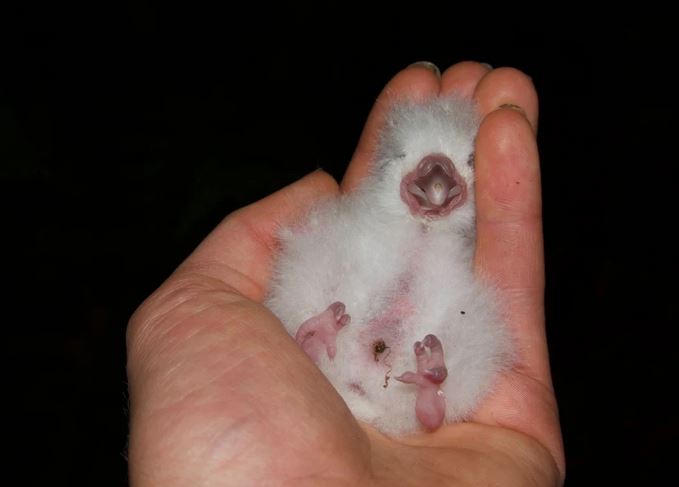
Naylor said the situation was tense for everyone involved, including a ranger from the Department of Conservation. Fortunately, the chick has since made a strong recovery.
This was not the only emergency he handled during his visit to Codfish Island.
He also treated another chick, just 12 days old, named Rakiura-A2-2026, which had suffered serious injuries while still in the nest.
The young bird had a deep wound across the lower neck, cutting near the jugular vein. After thoroughly cleaning the injury, Naylor closed it using very small stitches.
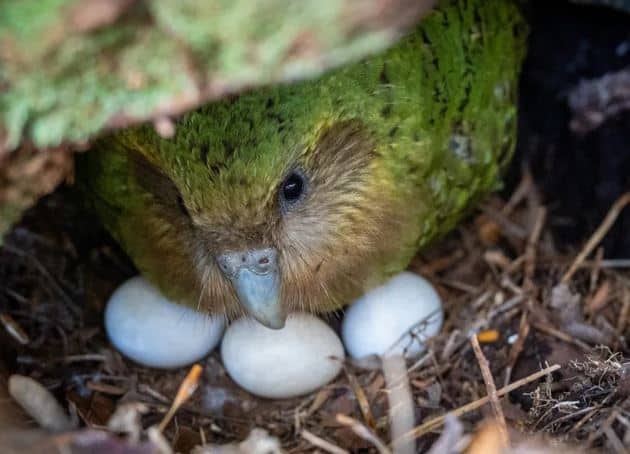
Rakiura-A2-2026 later gained attention as the first chick the public watched hatch live on a Kakapo Cam broadcast on January 25.
Naming for these birds follows a specific system; each chick’s name reflects its mother, clutch, egg number, and hatch year.
Currently, the chick is being cared for by foster mothers, while its biological mother looks after another chick, Nora-A2-2026, who has also appeared on the Kakapo Cam livestream.
Whenua Hou is one of three predator-free islands used for kākāpō breeding; the other two are located in Fiordland.
Currently, there are a total of 78 females are nesting across these islands.
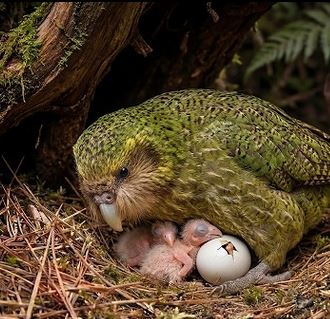
Several more fertile eggs are expected to hatch in the coming days, which means the total will easily exceed the previous high of 85 chicks recorded in 2019.
Unfortunately, not every chick will survive and reach adulthood.
Ranger Sarah Manktelow reported that seven chicks have already died, and more losses are anticipated.
In addition, five chicks have been moved to a veterinary facility to receive treatment.
Conservation teams overseeing the species are hopeful that these unprecedented numbers will contribute to increasing the overall population.