A powerful 7.8 earthquake hit the coast of the southern Philippines on Monday, leaving at least 35 people dead and more than 200 injured.
The quake also triggered a tsunami that sent waves about one metre high into nearby coastal areas.
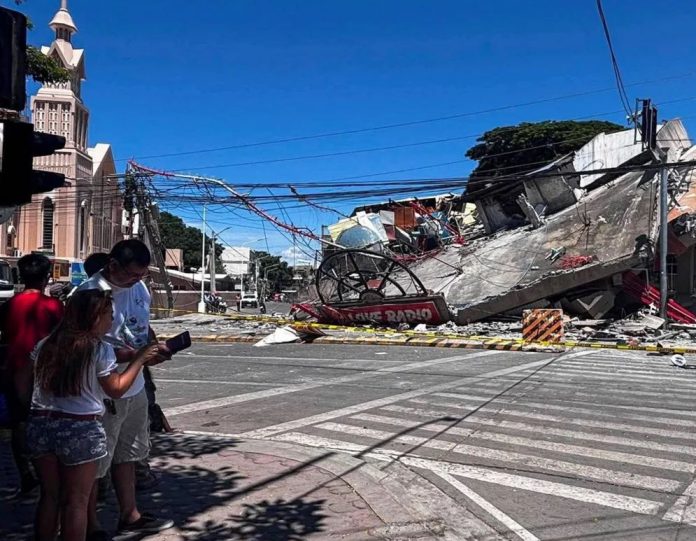
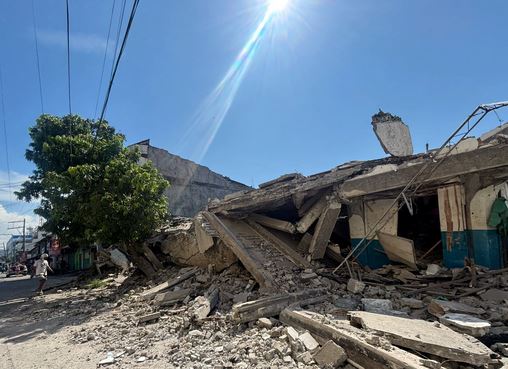 Several buildings also suffered major damage in the city of General Santos, with many collapsing altogether.
Reports of tsunami damage also came from at least one coastal community.
Smaller tsunami waves were later detected in Indonesia, Palau and even parts of southern Japan.
A landslide also swept through the town of Glan, killing 13. Four others died elsewhere in the province.
According to the Philippine Institute of Volcanology and Seismology, it was the strongest earthquake to hit the country so far this year.
Authorities warned residents to be careful around damaged homes and buildings as aftershocks could cause the already weakened structures to collapse.
Several countries, including the United States, France, Japan and New Zealand, offered support and said they were prepared to assist with recovery efforts if needed.
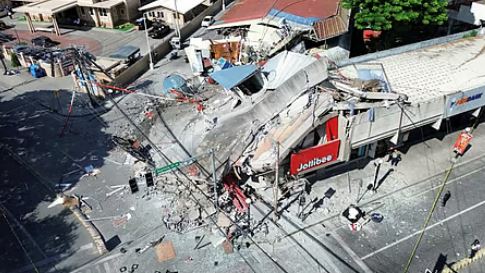 Rod Sosmena, a regional disaster official, was driving through General Santos when the quake struck shortly before 8 a.m.
He said the shaking was so intense that he initially thought something was wrong with his vehicle.
Within moments, people were rushing out of homes and into the streets.
In the town of Malita, students and teachers had gathered for a school ceremony on the first day back after summer break when the ground suddenly started sharking. School officials said some children cried and screamed, while others stayed calm.
Fortunaterly, no one was hurt, though a shed did collapse, damaging a motorcycle.
So far, at least four people remain uncounted for in General Santos. Rescue teams are currently focusing on searching damaged buildings, including a supermarket, warehouse and school, where people may have become trapped.
The earthquake also briefly shut down the local airport, causing 17 domestic flights to be canceled.
Scientists said the earthquake originated offshore near Mindanao, the Philippines’ second-largest island. It struck about 33 kilometres below the surface and roughly 32 kilometres southwest of Maasim in Sarangani province.
President Ferdinand Marcos Jr. suspended classes in the affected areas and told emergency teams to start relief efforts right away. He also said the national government would help support communities hit by the disaster.
The tsunami threat was downgraded a few hours later, and officials eventually lifted the warnings. Still many coastal areas saw damage.
 In one village, strong waves had damaged six houses built on stilts.
Most of the fatalities outside the Sarangani landslide were caused by collapsing structures and falling debris. Some people also lost their lives inside buildings, including a mosque.
Casualties were also reported in South Cotabato, Davao Occidental and Balut Island.
A local radio station had a close call when part of the four-storey building that housed its provincial office partially collapsed. Staff managed to get out safely, and no one was hurt.
According to officials, tsunami waves of about one metre, were reported in Sarangani and Sultan Kudarat provinces. One community saw waves reach around 1.4 metres. Smaller waves were also detected in Indonesia, Palau and Japan.
The earthquake was felt beyond the Philippines, including in Malaysia’s Sabah state, which is located relatively close to the country’s southern islands.
Earthquakes are common in the Philippines because the country sits along the Pacific Ring of Fire, a region known for frequent seismic and volcanic activity.
Every year, the country faces around 20 typhoons and tropical storms, making it one of the most disaster-prone countries in the world.