
Health officials are trying to trace the source of a parasite outbreak causing severe diarrhea across the US while working to understand how it has spread.
The illness, known as cyclosporiasis, is caused by the Cyclospora parasite, which is usually spread through contaminated food or water, particularly during the warmer months.
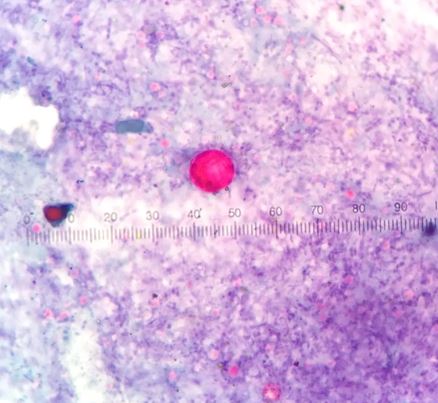 According to the US Centers for Disease Control and Prevention (CDC), nearly 7,000 people in 34 states have fallen ill. While the infection is rarely life-threatening, it commonly causes frequent, watery diarrhoea.
Experts say Cyclospora is one of the most difficult foodborne parasites to trace.
Unlike many other food-related illnesses that appear within hours, symptoms from Cyclospora often take one to two weeks to develop.
By the time someone develope symptoms, they may no longer remember exactly what they ate, making it much harder for investigators to identify the contaminated food.
Detecting the parasite in food is also a lengthy and complicated process.
Instead of using standard testing methods, laboratories must wash large amounts of produce to collect parasite organisms before they can be tested.
Because Cyclospora can be present in extremely small quantities, investigators often need very large samples of food to have any chance of finding it.
 The size of the outbreak has created another challenge.
Public health specialists believe the infections likely came from several different contaminated foods rather than a single source, making it much more difficult to pinpoint where the contamination occurred.
Michigan is currently the hardest-hit state, with more than 3,300 cases, followed by New York.
Unfortunately, officials have not yet identified the exact foods responsible.
In the meantime, they are encouraging people to thoroughly wash fresh produce, and to avoid eating certain fruits such as raspberries; cooking vegetables can also help reduce the risk of infection.
Some public health experts believe the recent staffing and budget cuts within the US Department of Health and Human Services have made outbreak investigations more difficult.
 Under Health Secretary Robert F. Kennedy Jr., the department reduced funding and personnel as part of a broader government cost-cutting effort linked to Elon Musk’s Department of Government Efficiency.
Those changes also affected FoodNet, the federal surveillance program that monitors foodborne illnesses such as Cyclospora, Salmonella and Listeria.
Last year, the program reduced its work and stopped fully tracking most pathogens, focusing only on two.
Despite changes to FoodNet, HHS said the CDC is still tracking Cyclospora cases by collecting data from 3,000 health departments and using other surveillance tools.