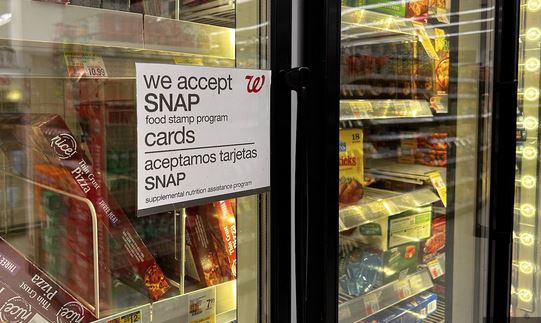
When Angelica Garcia went to renew her food stamp benefits earlier this year, she thought the process would be familiar. Instead, it turned into a long and frustrating ordeal.
Garcia, who is a single mother, submitted her paperwork, then spent weeks trying to get answers.
She made repeated calls to Arizona’s Department of Economic Security, often waiting on hold only for the call to disconnect.
She also made trips to an understaffed office, where lengthy waits for assistance became the norm.
The delays meant Garcia went without benefits for two months before her case was finally approved again in June. During that time, her family relied on food-bank donations and inexpensive staples such as rice, beans and tortillas to get by.
After three years on food stamps, Garcia said she’s used to the challenges that come with the system, but lately it feels like things are getting harder and garder.
Since President Donald Trump’s tax and spending law took effect last July, more than 4.7 million people across the U.S. have lost their SNAP benefits.
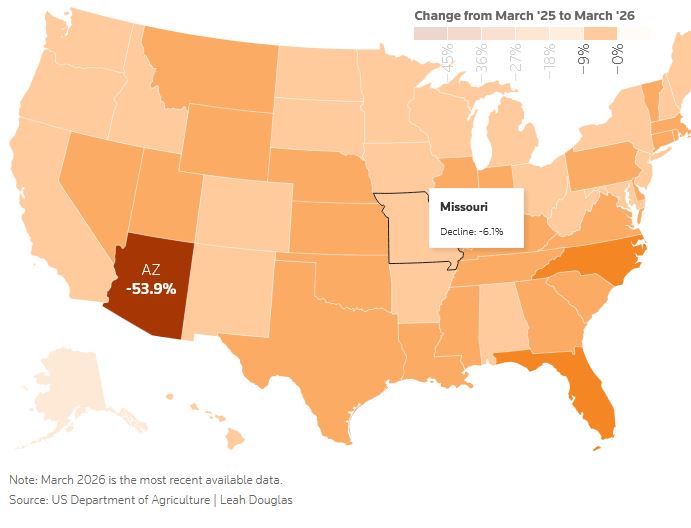
According to data from the U.S. Department of Agriculture, that represents roughly 11% of all participants as of March.
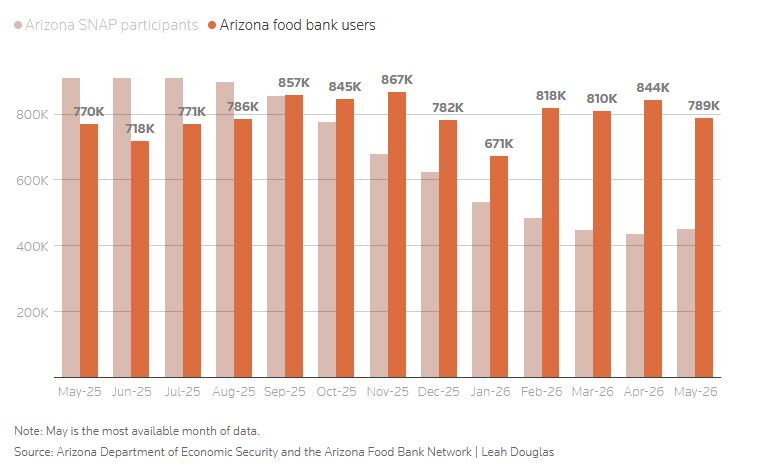
Arizona has been hit harder than any other state, where the number of SNAP recipients have decreased by roughly 50%.
State data through the end of May shows that more than 457,000 Arizona residents are no longer receiving benefits, nearly 196,000 of whom are children.
Between March 2025 and March 2026, Arizona’s food stamp enrollment fell by more than half.
The legislation cuts SNAP spending by about $187 billion over the next decade, reducing overall funding by roughly 17%.
Starting in October next year, states will have to meet certain federal performance standards. Those that fall short could be hit with financial penalties and will also be responsible for covering more of the program’s administrative costs.
Experts and state officials say Arizona’s enrollment has fallen especially quickly because the state moved faster than many others to implement the new federal rules.
Officials in Governor Katie Hobbs’ administration have argued that complying with the federal requirements is necessary to avoid major financial penalties that could further affect residents who depend on food assistance.
The White House has defended the changes, saying they are intended to focus benefits on American citizens and reduce waste, fraud and abuse through greater cost-sharing with states.
The USDA, which oversees the food stamp program, says the new work requirements are partly responsible for the decline in participation across the country.