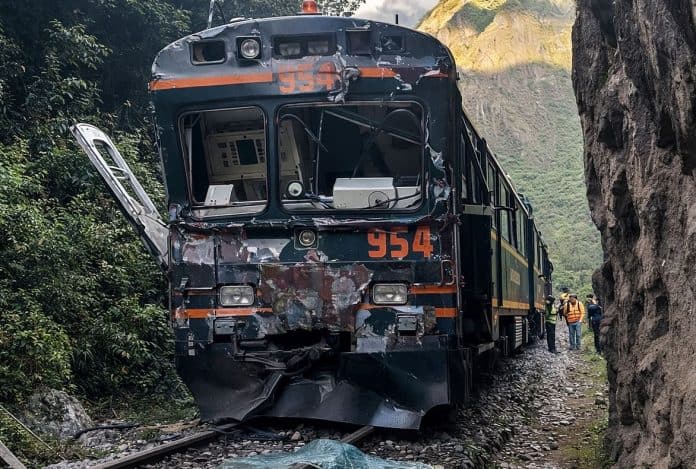
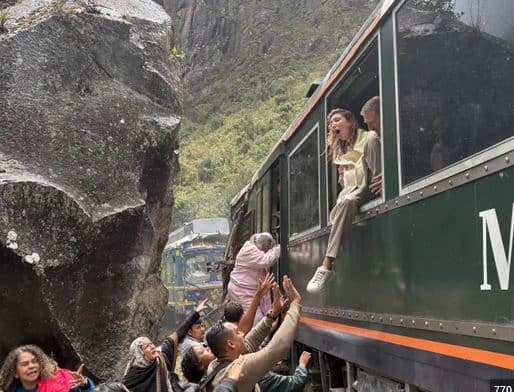
Two trains crashed into each other head-on close to Machu Picchu, one of Peru’s busiest tourist attractions.
The accident happened around 1:20 p.m. local time on Tuesday and left one train driver dead, while more than 40 others were injured.
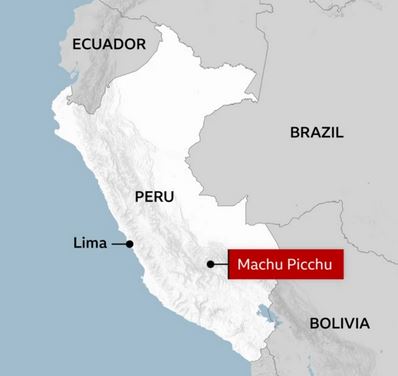
The collision occurred along the rail line between Aguas Calientes, the town nearest to Machu Picchu, and Ollantaytambo Station. The trip between the two stations usually takes about an hour and a half.
Most of those who suffered severe injuries were sitting toward the front.
After getting off the train, he recalls seeing several people bleeding and badly injured.
He recalls seeing the table in front of him having been snapped in half from the force of the collision.
Broken glass also covered the floor, and injured passengers were left lying in the aisle.
Honkoop tried to assist people who were stuck by shifting luggage out of the way. He also shared pain medication, explaining that he happened to have some with him after recently having his wisdom teeth removed.
The UK Foreign Office confirmed that several British citizens were injured and said support is being provided.
The US Embassy in Peru also said a number of U.S. nationals were involved.
Honkoop said his tour group was later taken to a nearby village, where they received food and medicine before being taken to a local hotel.
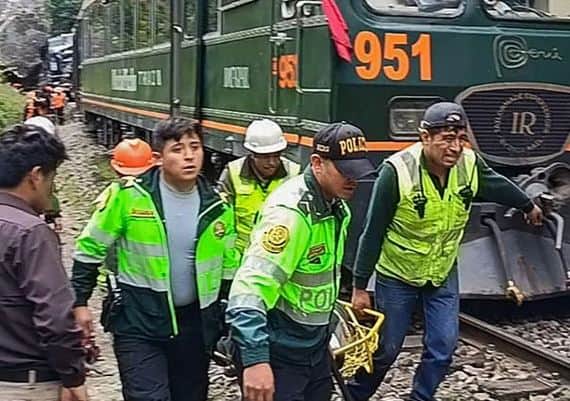
In a statement, PeruRail said it was deeply sorry for the incident. The company said staff immediately began giving first aid to the conductor, driver, and passengers involved in the crash.
Authorities have not yet determined what caused the head-on collision.
The incident comes during an ongoing dispute involving transport operators serving the Unesco world heritage site, with some local residents criticizing what they say is a lack of transparency in the bidding process.
Machu Picchu, a city built in the 15th century in the Peruvian Andes, is considered one of the Seven Modern Wonders of the World.
Tourists can reach the site by hiking the Inca Trail with a licensed tour operator, or by taking a combination of trains and buses.
To help protect the heritage site, authorities introduced a daily visitor limit in 2011.