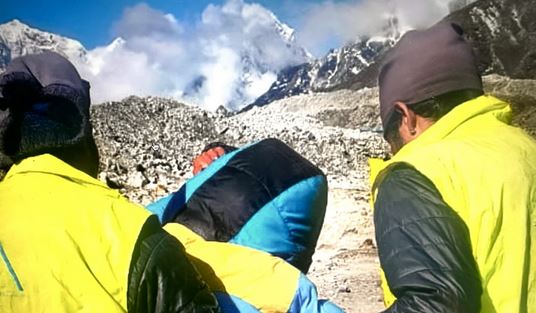
A Nepali mountain guide who had gone missing on Mt. Everest for six days said he survived by eating a few pieces of chocolate and chewing ice.
Dawa Sherpa said he was forced to stop during his descent after running out of oxygen.
At one point, people assumed the 57-year-old had died on the mountain.
Back in Kathmandu, his family had already begun funeral rituals before word came that he had been spotted alive by a cleanup crew making its way up the mountain.
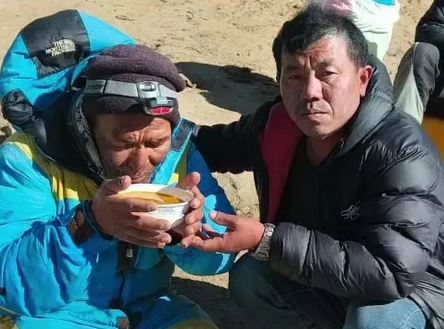
After being rescued, Dawa Sherpa was taken to a hospital in Kathmandu. He was treated for dehydration, frostbite and a broken bone.
Looking back on the ordeal, he said there were moments when he truly believed he would die.
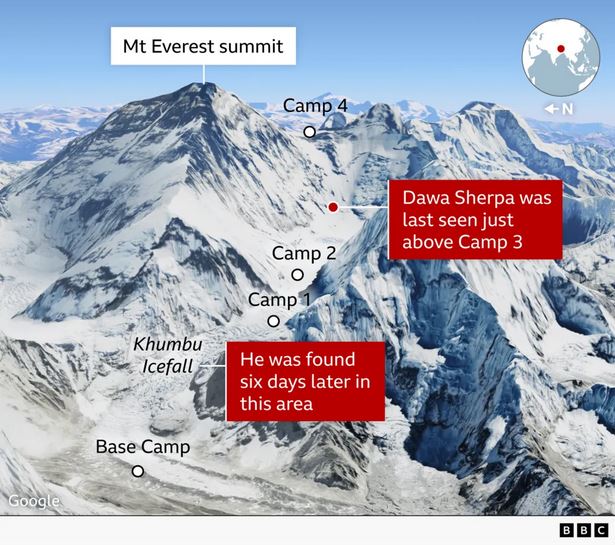 The last known climber to see him before the rescue was former British soldier Chris Thrall. He recalled seeing Dawa sitting on his backpack near Camp 3, something experienced climbers often do while taking a short break.
Thrall continued down the mountain and soon came across another climber who was struggling badly without oxygen and suffering from frostbite. His attention shifted to helping that climber get down safely.
Later, it became clear that Dawa had run into serious trouble.
After his oxygen supply ran out, he no longer had the strength to keep moving. For the first couple of days he had nothing to eat.
To survive, he chewed on ice despite the pain it caused his teeth. Eventually, he found some chocolates in his pocket and managed to melt ice for drinking water.
 As he slowly made his way down the mountain, he fell into a crevasse.
He became trapped and remained there for two and a half days.
It wasn’t until an avalanche sent fresh snow into the crevasse, that he was able to escape.
Once he was out, he spotted climbing ropes nearby and used them to descend the mountain.
Another avalanche threatened him along the way, but he kept moving. He spent the night making his way down the mountain until he finally reached an area near base camp.
That was when he saw other people for the first time in almost a week. Members of a waste collection team spotted him and helped carry him to safety.
His survival stunned the climbing community, his family and even the people who had been searching for him.
Pemba Sherpa, who helped oversee the search effort, described the rescue as an extraordinary example of someone saving himself against overwhelming odds.
Chris Thrall said he could hardly believe the news when he first saw online reports claiming Dawa was alive.
Just a little earlier, he had been comforting Dawa’s daughter, as they believed he had died on the mountain.
Dawa’s wife was just as shocked. She said she had already accepted that he was gone after being told a rescue was unlikely.
When she finally saw him again, she struggled to believe he had survived after spending so many days alone without proper food or supplies on the unforgiving mountain.
His daughter later visited him in hospital and said he recognized family members, was talking and appeared to be recovering well.
Doctors say he remains in stable condition and is continuing to improve while receiving intensive medical care.
This year’s Everest season has been the busiest on record, with more than 1,000 climbers reaching the summit.
At the same time, five people have died while climbing Everest this year, bringing the overall death count to over 300.