A man from Michigan has died from rabies after receiving a kidney donation from a man who had the virus following a run-in with a skunk.
The Centers for Disease Control and Prevention reported that the patient underwent a kidney transplant in December 2024 at a hospital in Ohio.

He was taken to the hospital and placed on a ventilator, but he passed away soon after. Postmortem testing revealed he had rabies. Since his family said he had not been around any animals, doctors were unsure how he became infected.
Medical teams subsequently revisited the records of the kidney donor, a man from Idaho. In his Donor Risk Assessment Interview, he mentioned that a skunk had scratched him.
An Encounter With a Skunk
The donor’s family later explained that he had been holding a kitten on his rural property when a skunk approached aggressively.
He managed to render the skunk unconsciousness but ended up with a bleeding scratch on his shin. He did not think the animal had bitten him at the time.

About five weeks after that encounter, he developed confusion, trouble walking and swallowing, a stiff neck, and hallucinations. Just a couple of days later, he was found collapsed and unresponsive at home after what appeared to be a cardiac arrest.
Although doctors revived him and admitted him to the hospital, he never woke up. He was eventually declared brain dead and removed from life support.
According to the report, several of his organs were donated, including one of his kidneys.
Once doctors suspected rabies in the kidney recipient, they reviewed and retested the donor’s lab samples. Those samples unexpectedly came back negative.
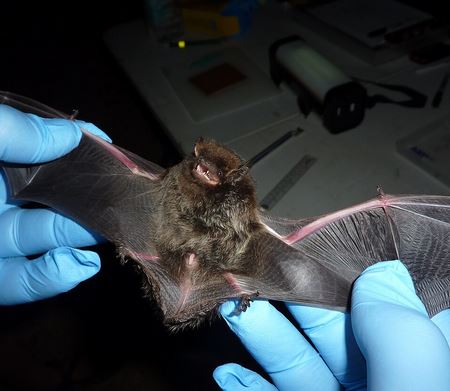
But when they examined biopsy tissue taken directly from the donor’s kidneys, they found a rabies strain linked to silver-haired bats.
This meant that the Idaho donor had actually died from rabies and had unknowingly transmitted it through the transplant.
The CDC says this is only the fourth known case of rabies being spread through an organ transplant in the U.S. since 1978.
Experts emphasized that the chance of rabies or other infections being passed through transplants remains extremely low.
Officials later learned that three additional patients had received corneas from the same donor. The grafts were removed right away and each patient received preventive treatment.
Fortunately, none of them have shown any signs of illness.
The CDC noted that in the U.S., donor family members are usually asked about possible infectious disease risks, including animal contact. Rabies, however, is not routinely tested for because human cases in the country are so uncommon.