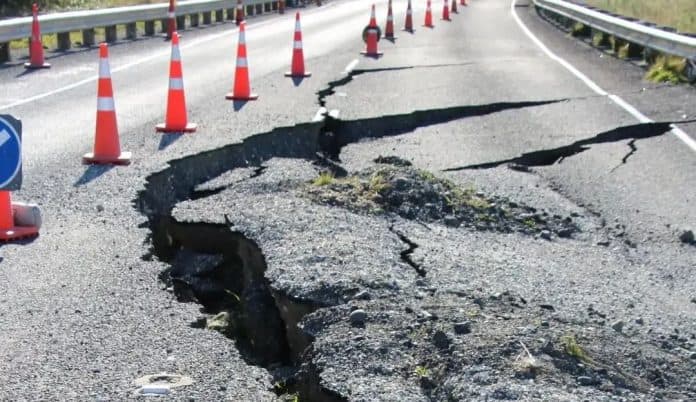
A strong 6.9-magnitude earthquake hit northern Japan on Sunday evening, according to the Japan Meteorological Agency. The initial quake was followed by several aftershocks.
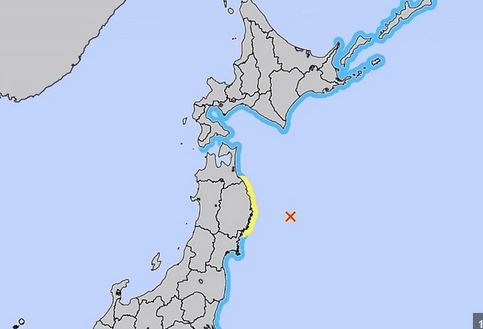
The epicenter was located off the coast of Iwate Prefecture, striking at 5:03 p.m. local time at a depth of about 10 miles (16 kilometers).
Following the quake, bullet trains in the area were temporarily delayed.
So far, officials haven’t reported any injuries or damage, and both nuclear power plants in the region are operating normally with no irregularities.
Right after the quake, the agency issued a tsunami advisory for parts of the northern coastline, warning that waves could reach up to 3 feet and, in some spots, potentially rise as high as 9 feet.
Small tsunami waves were later observed – about 4 inches in Ofunato, Miyako, Kamishi, and Ominato, and up to 8 inches along the coast of Kuji.
Tsunami activity often continues for hours after a major quake, sending waves ashore multiple times and sometimes increasing in size.

While the advisory was active, people were asked to stay clear of the shoreline and avoid the ocean until conditions were declared safe.
About three hours after the main quake, the meteorological agency lifted its tsunami advisory. Officials added that the region will still face a heightened risk of strong earthquakes for the next week, with the next two to three days considered the most critical.
Additional tremors were reported throughout Iwate Prefecture, and residents on Hokkaido, Japan’s northernmost island, also experienced a string of quakes.
Northeastern Japan More Prone to Earthquakes
Northeastern Japan, which covers the prefectures that make up the Tohoku region, is especially vulnerable to seismic activity.
Back in March 2011, a massive 9.1 quake struck Fukushima, just below Iwate, setting off a powerful tsunami and causing a nuclear meltdown. Nearly 20,000 people lost their lives.
The disaster also inflicted major damage on the Fukushima Daiichi nuclear power plant.

More than ten years later, many residents are still unable to return to the no-go zone, an area that remains restricted due to contamination from the 2011 event.
Even today, groups continue to organize demonstrations to express their frustration over what they view as insufficient acknowledgement from authorities regarding the ongoing dangers of nuclear energy.
According to an official from the agency, there is no evidence that the recent 6.9 quake has any direct connection to the 2011 disaster.
The only link, they said, is that this part of Japan has always been more prone to powerful earthquakes in general.