Donna Gustafson felt that something wasn’t right after flying from Florida to Australia.
The 22-hour trip left her more tired than usual, and a couple of days later, her skin started turning yellow.
At first, she thought it was just dehydration and went to the emergency room for fluids. Instead, doctors told her she may have pancreatic cancer.

She and her husband quickly flew back home.
Within nine days, she underwent surgery to remove a stage 2 tumor from her pancreas.
Just before she was set to begin chemotherapy, her doctors brought up an experimental option, a clinical trial using personalized mRNA vaccines for cancer.
This was early 2020, before mRNA vaccines became widely known during the pandemic. Not long afterwards, she became the first patient to receive this kind of vaccine for pancreatic cancer.Pancreatic cancer is one of the most deadly types, with fewer than 13 percent of patients living beyond five years.
There’s no standard screening test like there is for other cancers, and symptoms usually don’t appear until things are already advanced.
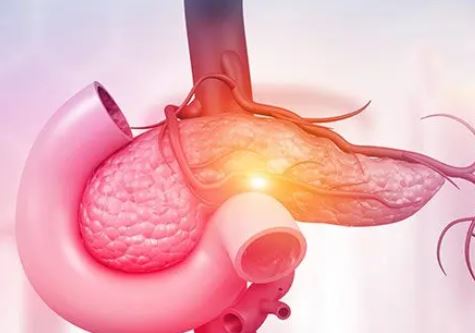 By the time doctors find the cancer, there usually aren’t many treatment options left.
What’s more, is that only about one in five people can even have surgery, which you need in order to qualify for such trials.
The vaccine works by using the body’s own immune system to fight the cancer.
Instead of targeting existing tumors, it targets any remaining cancer cells that might be too small to detect and helps prevent the disease from coming back.
Before receiving the vaccine, however, patients still have to undergo surgery to remove the tumor.
After that, scientists use genetic material from the patient themselves to make the vaccine. In the trial, patients also received chemotherapy afterward as that’s the standard treatment following surgery.
 Regular immunotherapy can be effective, however, it only helps about 20% of cancers.
Pancreatic cancer is one of the hardest to treat. For the longest time, experts believed the body wouldn’t even be able create an immune response against it.
But in this early trial, something surprising happened.
After getting several doses of a personalized mRNA vaccine, some patients were actually able to build up strong immune defenses. Their bodies produced special cells called T cells, which could target and attack the cancer.
Out of the small group in the study, several of the patients who responded to the vaccine are still alive years later.
A couple of them did see their cancer come back, but others, including one of the early participants, have stayed cancer-free.
Researchers say one key takeaway is that patients who had a strong immune response tended to live longer than those who didn’t. Still, this was a very small study, so more testing is needed to be sure.