Scientists in Canada have recorded a rare case of a female polar bear taking in and raising a cub that was not her own.
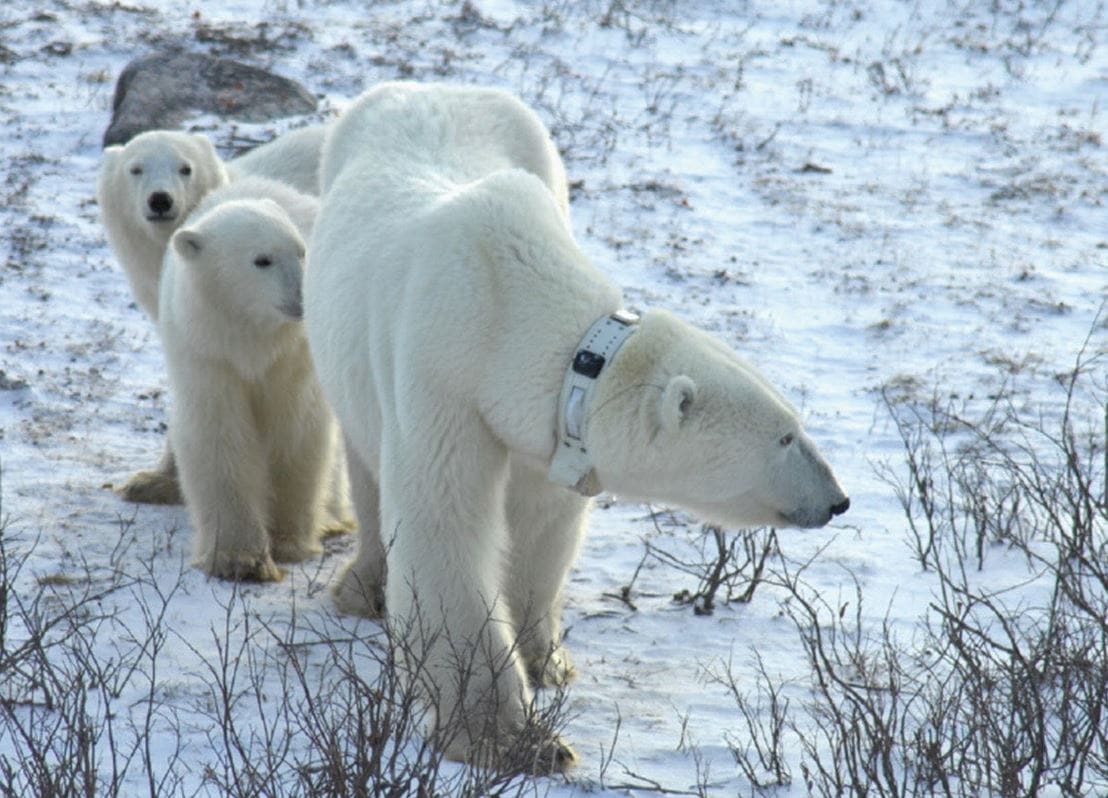
According to Polar Bears International, researchers fitted a female polar bear with a GPS tracking collar earlier this spring, when she was caring for a single young cub.
When the same mother bear was spotted again last month, scientists were surprised to see her traveling with two cubs that appeared to be about the same age.
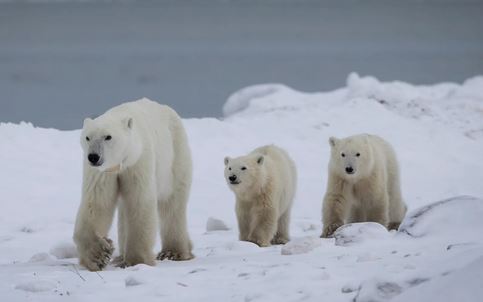
They immediately realized that the bear had adopted a second cub, something that is extremely uncommon among polar bears.
Evan Richardson, a research scientist, said female polar bears are known to be very attentive mothers and are naturally tuned in to protecting and caring for young cubs.
Researchers believe the female may have taken in the cub after encountering it crying along the coastline after it had lost its mother.
The adult bear, identified by scientists as X33991, and her cubs belong to the polar bear subpopulation in Western Hudson Bay, one of the most closely studied polar bear regions in the world.

Out of roughly 4,600 bears studied over the past 50 years, researchers have documented just 13 cases of adoption.
Alysa McCall said adoptions among polar bears are rare and poorly understood, and scientists still do not know what drives the behavior.
The two cubs appear healthy and well-fed and are estimated to be around 10 to 11 months old. They will likely remain with their mother for about another year and a half.
GPS tracking data shows the three polar bears have already made it out onto the sea ice.
For now, the cubs depend entirely on their mother to hunt seals, which is essential until they are able to learn those skills on their own.
However, the adopted cub is thought to have a much better chance of surviving.
Researchers plan to collect genetic samples from the cub to find out whether its biological mother is known to scientists or could still be alive.
In some past adoption cases, the cubs were not truly orphaned. Instead, the mothers had accidentally swapped cubs, leading to a mix-up between litters.
Alysa McCall said researchers may never learn exactly what happened to this cub’s biological mother, but she noted that the adoption highlights just how remarkable polar bears can be.